SALEM — I grew up down here in Salem County, where the roads bend around things older than the roads, and I learned young that history in South Jersey is not a thing you visit. It’s a thing you live on top of. The farm field you pass on your way to the Acme was a battlefield. The tavern on the corner where somebody now sells craft beer is a tavern where men once argued themselves toward treason against a king. We don’t always know it’s there. But it’s there.
This year, the country has spent a great deal of energy remembering that it turned 250 years old — the semiquincentennial, a word that sounds like a stumble and means two and a half centuries since 1776. South Jersey, to its credit, has not let the moment pass quietly. Across the region, towns and county historical commissions have mounted events, opened sites, and in some cases stitched together new heritage trails meant to walk a visitor from one Revolutionary-era landmark to the next. As the leaves come down and the big summer commemorations give way to quieter autumn remembrance, it’s worth sitting with what actually happened in these communities — because the Revolution was not something that happened to Philadelphia while New Jersey watched across the river. It happened here.
Red Bank: where the river was held
Start at the water. In the autumn of 1777, with the British having taken Philadelphia, the Delaware River became the whole game. If the Crown’s ships couldn’t come up the river to resupply the occupied city, the occupation was a trap. And standing in the way, on the Jersey bank at what is now National Park in Gloucester County, was Fort Mercer — a earthwork fort held by a few hundred Continental soldiers at a place called Red Bank. In October 1777, a far larger force of Hessians, the king’s hired German troops, marched on it confident the thing would fall in an afternoon.
It did not fall. The defenders held, and the attackers were cut down in numbers that stunned both sides. It was one of the lopsided American victories of that grim year, and it bought the cause time when time was the only thing the cause had. Today the Whitall House still stands on that ground — the home of a Quaker family whose matriarch, by the stories handed down, kept spinning at her wheel as the cannon fire came close, then turned her house into a hospital for the wounded of both armies when the shooting stopped. That is as South Jersey a story as I know: pacifist by faith, practical by necessity, and unwilling to let a dying man go untended because of the color of his coat.
The Hancock House and the hard story
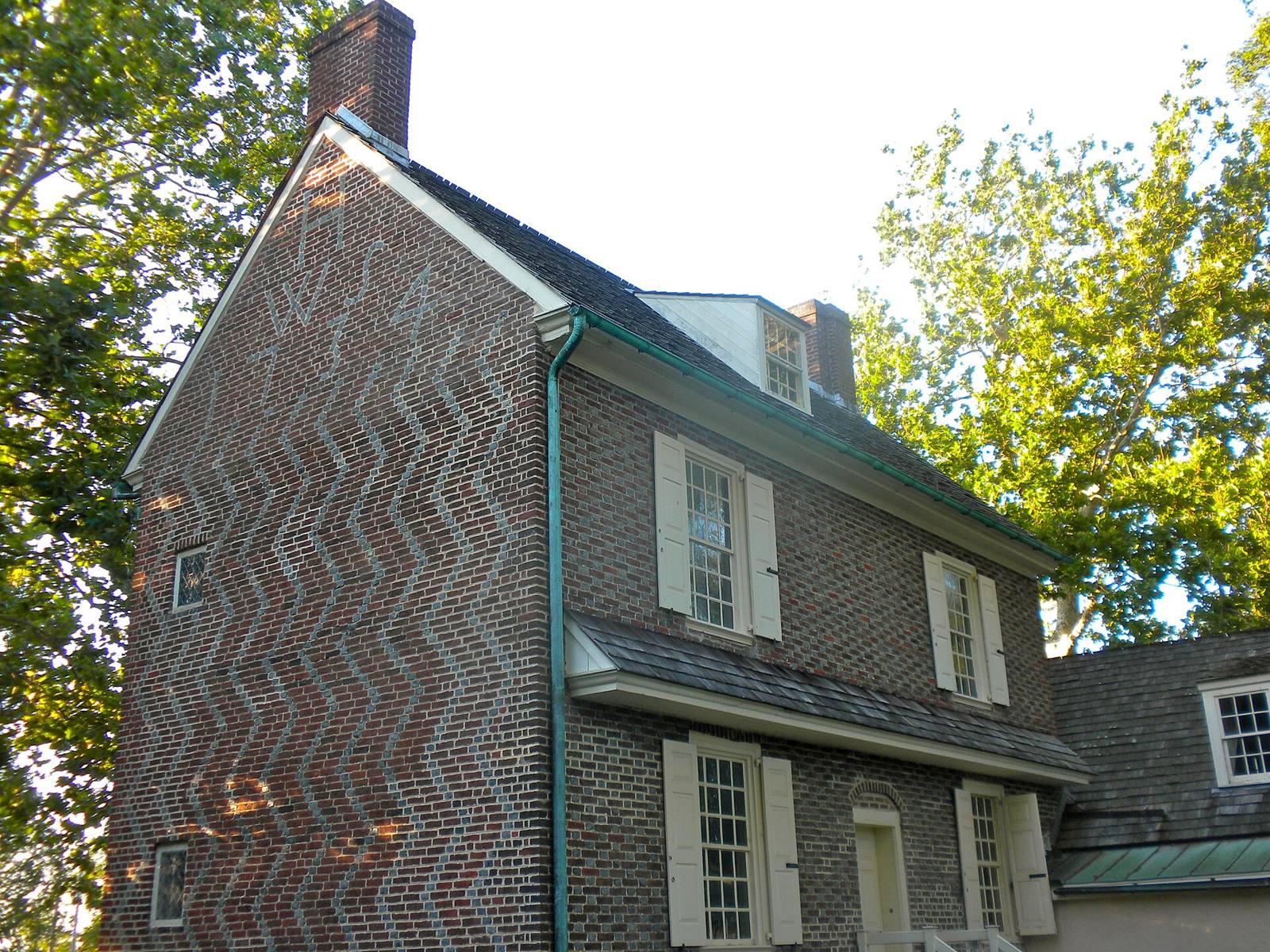
Come inland and the Revolution gets more intimate, and darker. In my own Salem County, in Lower Alloways Creek, sits the Hancock House, a handsome brick home patterned in the glazed Flemish bond the old builders down here loved. In March of 1778 it became the scene of one of the war’s uglier episodes — a nighttime raid in which British and Loyalist troops bayoneted men quartered there, some of them, by the accounts, as they tried to surrender. We call it the Hancock House Massacre. It is not a story that flatters anyone, and that is precisely why it matters. A grown-up country remembers its origins whole — the Red Banks that make us proud and the Hancock Houses that make us wince — and South Jersey, standing on both, is in a position to tell the truth.
Move north into Camden County and the Revolution turns to argument, which is where revolutions are actually won. In Haddonfield — my favorite town in the region, and I’ll fight about it — the Indian King Tavern still stands on Kings Highway, and in 1777 the New Jersey legislature met in that very building. It was there, by tradition, that the fledgling state took up the business of calling itself a state: adopting the great seal, conducting the ordinary, radical work of self-government while an army was in the field a few miles away. A tavern. That’s where it happened. Not a marble capitol — a room where men ate and drank and decided they would govern themselves.
The Revolution happened here, too. It always did.Henry Whitaker
There are more. The Gabreil Daveis Tavern in Gloucester Township, the old Quaker meetinghouses that fed and sheltered soldiers, the mill sites and ferry crossings whose names survive only on faded signs. Most of them you could drive past a thousand times and never notice. That, to me, is the whole point of a year like this one. The 250th is not really about the famous places that were always going to be remembered. It’s an invitation to notice the unmarked ones — to understand that the ground under an ordinary South Jersey errand is not ordinary at all.
Why the quiet places need keepers
I’ll make a confession, as the Gazette’s resident keeper of old stories. I worry about these places. Historical preservation is a cause that loses to almost everything — to development, to tight municipal budgets, to the simple forgetting that time does for free. A battlefield doesn’t generate tax revenue. A massacre site doesn’t draw a crowd on a Tuesday. These sites survive because a handful of volunteers in each town refuse to let them go, and those volunteers are, frankly, getting older. The best thing the 250th can do is not throw a party. It’s to hand the keys to somebody young.
So here is my heritage reading for a November Sunday, and it costs nothing. Pick one. Drive to National Park and stand where the Hessians fell and the Whitall family nursed the dying. Walk the lane at the Hancock House and let the hard story in. Stop at the Indian King and picture a brand-new state being born in a barroom. You will not find costumed reenactors on a quiet fall afternoon. You’ll find something better — a little silence, a plaque, and the strange electric realization that the enormous thing we’re all celebrating this year happened, in no small part, right here, on the ground you were already standing on.
The Revolution happened here, too. It always did. The 250th is just the year we finally said so out loud.
Based on reporting from CBS News Philadelphia and 6abc, and the historical records of Gloucester, Camden, and Salem county historical commissions.
More South Jersey History
Henry Whitaker keeps the old stories. Find more of them in our History section.
Read More Local News →