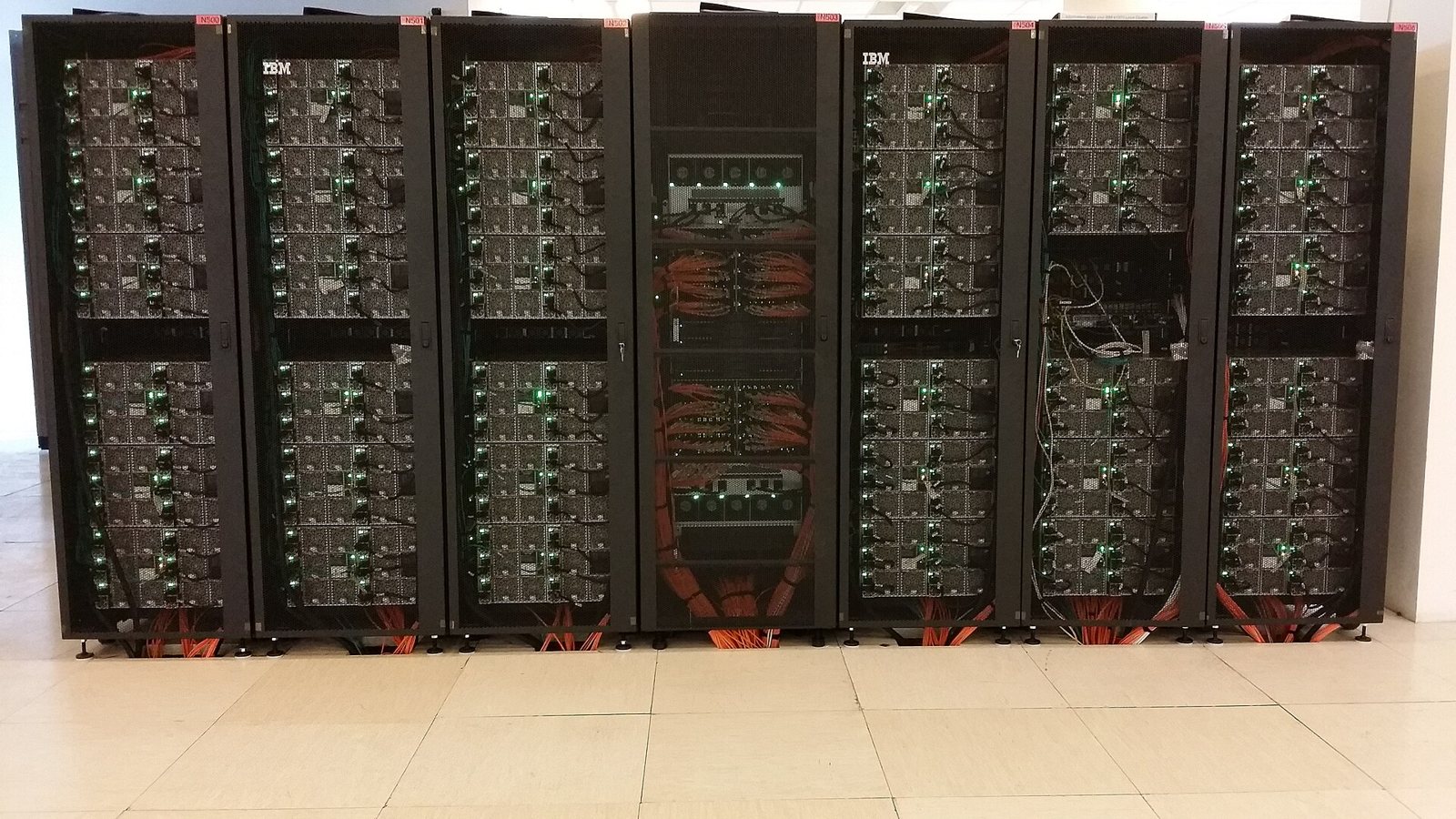
When you hear “$125 million supercomputer,” your mind probably goes to a windowless room in Princeton where physicists do things the rest of us will never understand. Fair enough. But tucked inside the New Jersey Supercomputer Initiative — the public-private project Governor Mikie Sherrill announced last month — is a detail that matters a lot more to a kid taking classes at Camden County College or Rowan College of South Jersey than it might first appear. This machine isn’t just for the people with “PhD” after their names.
The machine
First, the machine itself. It’s a more-than-$125 million effort, and the single largest piece is a $75 million gift from Chris Malachowsky — a co-founder of the chip giant Nvidia, and, as it happens, a Monmouth County native — and his wife, Melody. The state kicked in $25 million through the New Jersey Economic Development Authority, and SHI International, an IT company based in Somerset County, added another $25 million and will host the supercomputer at its New Jersey facilities. The pitch is big: the state says the machine will roughly double the supercomputing capacity available across all of New Jersey’s research universities combined and sharply expand access to the most advanced hardware. An independent nonprofit will start running it in 2027.
Who gets to plug in
Now, why should anyone in Gloucester or Burlington County care? Because of who gets to plug in. The initiative is being built to serve not just the state’s eight big research universities — your Princetons, Rutgers, NJITs and Stevenses — but also the New Jersey Council of County Colleges, the umbrella group for the two-year schools that educate an enormous share of South Jersey. That’s the part that got my attention. For decades, the gap between a regional community college and a flagship research university wasn’t just reputation — it was raw horsepower. The elite schools had computing muscle that nobody else could touch. If a county college student wanted to train a serious AI model or run a heavy simulation, they were, practically speaking, out of luck.
Malachowsky himself seems to get this, and it appears to be the point. “Through the New Jersey Supercomputer Initiative, we can unlock the talent that exists all around us, transform schools, businesses, and the workforce,” he said when the project was announced — the idea being that students and working people retraining mid-career get a crack at the same tools, not just tenured faculty. For a region where plenty of adults are going back to school at a county college to pivot into a tech-adjacent job, that’s not an abstraction. That’s the difference between reading about artificial intelligence and actually building something with it.
The test that actually matters is whether a kid at a South Jersey county college ever gets to touch it.Ethan Brooks
What we don’t know yet
I’ll be honest about what we don’t know yet. Exactly how a student in Blackwood or Sewell will request time on the thing, how the queue gets managed, and whether “access” turns out to be generous or rationed — those details are still being worked out, and I’ll be watching them closely, because the gap between a nice press release and a usable login is where a lot of good intentions go to die. A shared machine only helps if the little guys don’t get stuck permanently at the back of that line.
But the ambition is the right one, and it lands in the direction I spend a lot of this column arguing for: technology that reaches the local mechanic, the returning student, the retiree taking a coding class, and not only the specialist. New Jersey is spending real money to build a very fast computer. The test that actually matters is whether a kid at a South Jersey county college ever gets to touch it.
Based on reporting from The Daily Princetonian and NJBIZ, and announcements from the Office of the Governor and the New Jersey Economic Development Authority.
More Tech & Innovation
Ethan Brooks will report back when the access rules for county colleges are published.
Read More Local News →