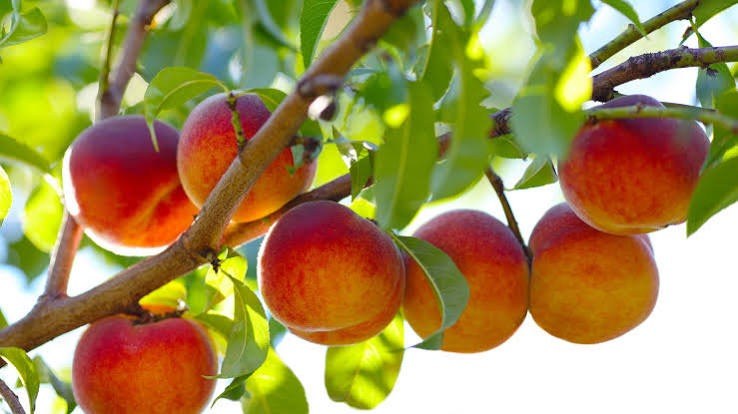
There is a rhythm to a South Jersey summer that most of us never think about until it’s threatened. Sometime around late July, the peaches show up — at the farm stand on the county road, in the wooden crate by the register, in the paper bag your neighbor hands you over the fence because they bought too many. New Jersey grows some of the best peaches in the country, and down here we treat that fact like a birthright.
This year, that birthright got tested in the span of four days in April.
A false spring, then the freeze
It started warm — unnaturally warm. A stretch this spring pushed temperatures into the 90s and coaxed the fruit trees into bloom weeks ahead of schedule. Then, between April 19 and April 22, the bottom fell out. Overnight lows dropped into the 20s. The blossoms that had opened early, trusting the false spring, froze on the branch. For a peach, that is the whole ballgame. No blossom, no fruit.
How bad it got
The damage across South Jersey has been, in places, close to total. One orchard owner reported 200 acres of peaches simply gone. At Rowand’s Farm in Glassboro, the entire cherry crop was wiped out — the first time, owner Stephen Rowand said, that it had happened in his lifetime. The farm didn’t open for cherry-picking this season at all, which for a family operation means no income from that crop for the whole year. Apples, pears, and asparagus took hits too. Early statewide estimates put the losses at or above $300 million, and Gov. Mikie Sherrill declared a state of emergency across all 21 counties, opening funding to help growers recover.
But here is the part I want South Jersey families to actually hear, because a headline about devastation can send you to the wrong conclusion: this is not a summer with no peaches. It’s a summer with fewer of them, and a different map of where to find them.
The farmers who still have fruit
The freeze didn’t hit every farm the same way. Bob Fralinger, a longtime South Jersey grower, lost about half his peaches — a brutal number in any normal year. But because so many farms nearby fared worse, Fralinger has become a lifeline. He told reporters that nearly 100 farm markets, some hours away, have come to him for fruit. That is what a farming community does when the weather picks winners and losers at random. The ones with something left share it around.
That’s the story underneath the frost — not what the weather took, but what the people who feed us did about it.Max Cedar
What it means at the stand
What it means for you at the stand is straightforward. Expect peaches later and in smaller supply. Expect to pay more — some farms have raised prices roughly 50 cents a pound, and a few specialty crops like blueberries have seen prices climb sharply. And expect your favorite roadside spot to maybe be sold out on a Saturday afternoon in a way it never was before. The move, if you love Jersey peaches, is to go early, go often, and go directly to the grower.
There’s a temptation to file a story like this under bad news and move on. I’d push back on that. The farmers I’ve watched work these fields don’t trade in self-pity. They lost a crop and then they got on the phone and found fruit for a hundred markets that needed it. So this summer, when you find the peaches, buy the peaches. Buy a few extra. Hand a bag over the fence. The season is thinner than usual, but it’s not gone, and the folks who grew what’s left could use a good year at the register to make up for a hard one in the orchard.
Which South Jersey farm stand are you loyal to? Tell us where you’re finding Jersey peaches this summer — we’ll help point readers toward the growers who still have fruit.
Based on reporting from NBC10 Philadelphia, the Philadelphia Inquirer, ABC7, and the Office of Gov. Mikie Sherrill.
Run a South Jersey Farm or Stand?
The Gazette wants to tell the story of this season — who got hit, who has fruit, and how our growers are getting through it. If you farm or run a stand, reach out.
Tell Your Story →