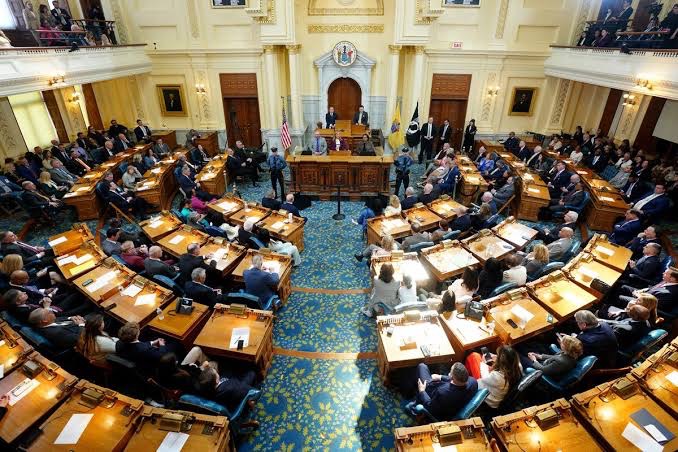
TRENTON — A state budget is a document almost designed to make your eyes glaze over. Sixty billion dollars, hundreds of line items, a signing ceremony, a round of press releases, and then everyone moves on. My job is to do the opposite of move on — to sit with it and answer the only question most readers actually have: what does this mean for my house, my school district, and my paycheck?
Governor Mikie Sherrill signed her first budget into law on July 1 — a record $60.7 billion spending plan for fiscal year 2027. She has described it as an affordability budget, and the headline she wants you to take away is that it delivers property tax relief without raising taxes on individual residents. Let’s test that claim against the numbers, because that’s what taxpayers deserve.
The property tax piece
The property tax piece is real and it is the largest part of the story. The budget sets aside more than $4.1 billion in direct property tax relief. That money moves through three programs many South Jersey homeowners already know by name. ANCHOR, the broadest of them, accounts for roughly $2.3 billion. The Senior Freeze program gets about $350 million. And Stay NJ — the program aimed at cutting property taxes for seniors — draws close to $700 million. If you own a home in Burlington, Camden, or Gloucester County and you’ve filed for any of these before, the practical takeaway is straightforward: the programs are funded, and you should make sure you actually apply.
Relief you’re eligible for but never claim is relief you don’t get.Grace Monroe
What it means for your school district
For families with kids in local schools, there’s a second number worth knowing. The budget commits a record $12.4 billion in K-12 education aid — more than $370 million above last year — plus a record $1.4 billion for preschool. What that means for your specific district depends on the state’s aid formula, and every district lands differently. But the statewide direction is up, and that’s relevant the next time your local board of education debates a program cut or a tax-levy increase. State aid is one of the biggest variables in that math.
The budget also makes its sixth consecutive full pension payment and holds a surplus of just over $6 billion — the kind of cushion that matters if the economy softens. Those aren’t line items you feel at the mailbox, but they’re the difference between a state that can absorb a bad year and one that scrambles.
The part that didn’t lead the press releases
Now the part that didn’t lead the press releases, and the part small business owners need to read closely. The budget is paired with a new assessment on large employers whose workers rely on Medicaid — a per-employee fee charged to those companies. It is aimed at big employers, not the corner shop, but if you run a growing South Jersey business and you’re anywhere near the threshold, this is a number to put in front of your accountant now rather than discover later. It’s the clearest example of a budget that avoids raising taxes on individuals while still finding revenue somewhere — and “somewhere” is always worth reading in full.
So does the affordability claim hold up?
Largely, on the property tax and school-aid side, the relief is funded and the individual tax rates weren’t raised. The honest caveat is that a budget is a plan, not a guarantee, and the relief only reaches the people who file for it. My advice is unglamorous and, I think, the most useful thing I can tell you: check which programs you qualify for, and apply before the deadlines. That’s where a $60.7 billion document turns into money in your pocket.
Based on reporting from NJBIZ, New Jersey Monitor, WHYY, the Jersey Vindicator, and the New Jersey Governor’s Office. The Neighborhood Gazette covers South Jersey at neighborhoodgazette.town.
Know Your Relief Programs
ANCHOR, Senior Freeze, Stay NJ — the relief only reaches the people who file. We’ll keep you posted on deadlines. Have a question about your eligibility?
Ask the Gazette →