Every October, like clockwork, Michael Myers comes home. The white mask, the coveralls, the slow walk that somehow always catches up to people running — it unspools again across cable and streaming and, if you’re lucky, a theater screen, in a quiet suburban town called Haddonfield. And every October I get to tell people the thing that makes me grin like an idiot: that town is ours.
Not literally. The Haddonfield in John Carpenter’s “Halloween” is nominally in Illinois. But the name came straight out of Camden County. Debra Hill — the woman who co-wrote and produced the 1978 original with Carpenter, a genuine pioneer in a genre that did not exactly roll out the welcome mat for women — grew up in Haddonfield, New Jersey. When she and Carpenter needed a name for the all-American town where evil comes to visit, she reached back to the tree-lined streets she knew as a kid. The most famous horror setting in American film history is, at its root, a love letter to a South Jersey borough.
I think about Debra Hill a lot this time of year, because she represents something I believe in with my whole double-espresso heart: that the stuff we make here travels. A girl from Haddonfield helped invent the modern slasher film. That’s not trivia. That’s a reminder that South Jersey has never just been a place that consumes culture — it’s a place that exports it.
Where to watch
Which brings me to where you should actually be watching movies this month. Because streaming horror alone in your living room is fine, I guess, but it misses the entire point of the genre. Horror is communal. It’s the collective gasp, the nervous laugh that ripples through a dark room, the stranger three seats down who grabs the armrest at the same second you do. You cannot get that from a laptop.
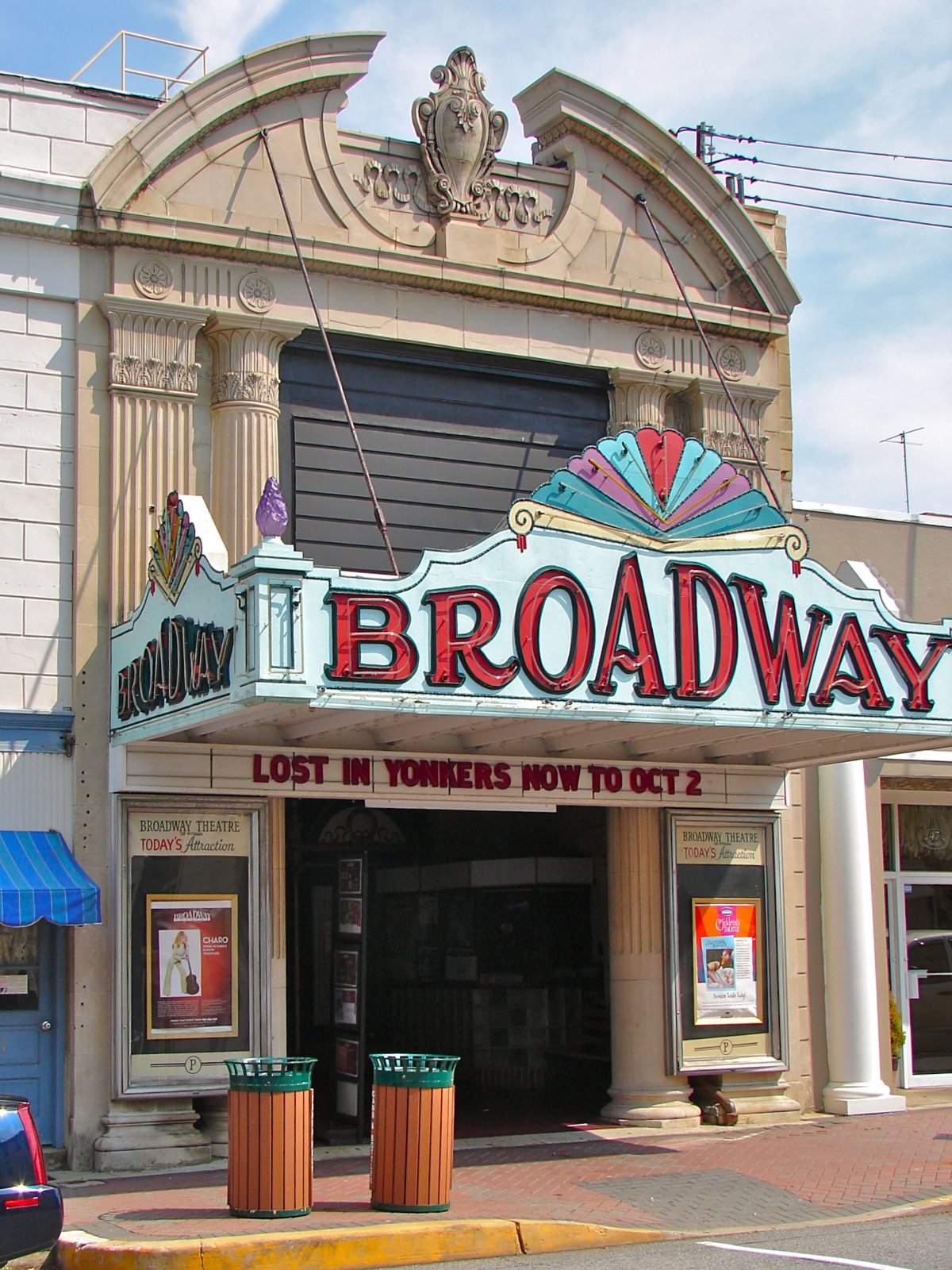
You can get it in Pitman. The Broadway Theatre, which opened its doors in May 1926 and just turned a full, glorious hundred years old this year, is exactly the kind of room horror was meant to be seen in. More than a thousand seats, a balcony, elevated boxes, and a Kimball pipe organ that still gets played before shows — the same instrument that once underscored silent films. Abbott and Costello played that stage. So did Bing Crosby. Owner Peter Slack has kept the place alive since 2006. I’d call it the best argument in Gloucester County for leaving the house.
Over in Haddon Township — yes, a stone’s throw from Debra Hill’s old Haddonfield — the Ritz Theatre has pulled off a similar trick, a 1920s house that reinvented itself as a beloved live venue instead of going dark like so many of its cousins. All over South Jersey, the old movie palaces that didn’t get bulldozed survived by refusing to be only one thing. That’s the whole secret, isn’t it? Reinvention. The ability to be a silent-film house, then a vaudeville stop, then a concert hall, then a theater, and never lose the soul of the place.
Horror movies are having a moment at the box office again — the genre has been one of the most reliable draws in theaters lately, because it’s one of the few things people still reliably want to experience in a crowd. That’s an opportunity for our historic rooms, not just the multiplex out by the highway.
The scary part was never the point. The point was doing it together.Vinny Vinci
The October pitch
So here’s my pitch for the back half of October. Watch “Halloween” — the 1978 one, accept no sequels — and when Laurie Strode walks those quiet Haddonfield streets, remember a kid from Camden County put that name on the screen. Then go find a real theater, preferably one older than your grandparents, and see something with a room full of strangers. Let the organ play. Let the floor creak. Let somebody gasp.
That’s the good stuff. That’s what Debra Hill understood. The scary part was never the point. The point was doing it together.
Based on reporting from New Jersey Monthly and biographical records on filmmaker Debra Hill.