GLOUCESTER TOWNSHIP — Say the name slowly and it gives up its secret. Gloucester. Not a word anyone in South Jersey invented. It belongs first to a cathedral city on the River Severn in England, a place of gray stone and old bells that the colonists who settled this patch of sandy Camden County soil remembered well enough to borrow. When they named their new home, they reached back across an ocean for it. Three and a quarter centuries later, we are still saying their homesickness out loud every time we give a stranger directions.
It is easy, in a township of more than 63,000 people spread across eight communities and some twenty-three square miles, to forget that you are living on top of one of the oldest municipalities in the state of New Jersey. Gloucester Township was first formed on June 1, 1695 — making it older than the United States by eighty-one years, older than the county it now belongs to, older very nearly than the idea of New Jersey as we understand it. When you stop at a red light on the Black Horse Pike, you are idling inside a civic entity that predates the Liberty Bell.
A map redrawn
The geography of belonging has shifted more than once beneath these feet. Back in 1683, the records tell us, Gloucester Township and Egg Harbor Township were the two towns that together made up all of Gloucester County — an enormous, thinly settled expanse that bears little resemblance to the tidy county lines of today. In time the township split into four smaller towns, the way a strong old tree sends up new trunks. And in 1844, in one of those administrative redrawings that rarely make the history books but quietly remake a map, Gloucester Township left the county that gave it its name and joined Camden County, where it has remained ever since. The name stayed Gloucester. The county became Camden. Both things are true, and the seeming contradiction is itself a piece of history worth keeping.
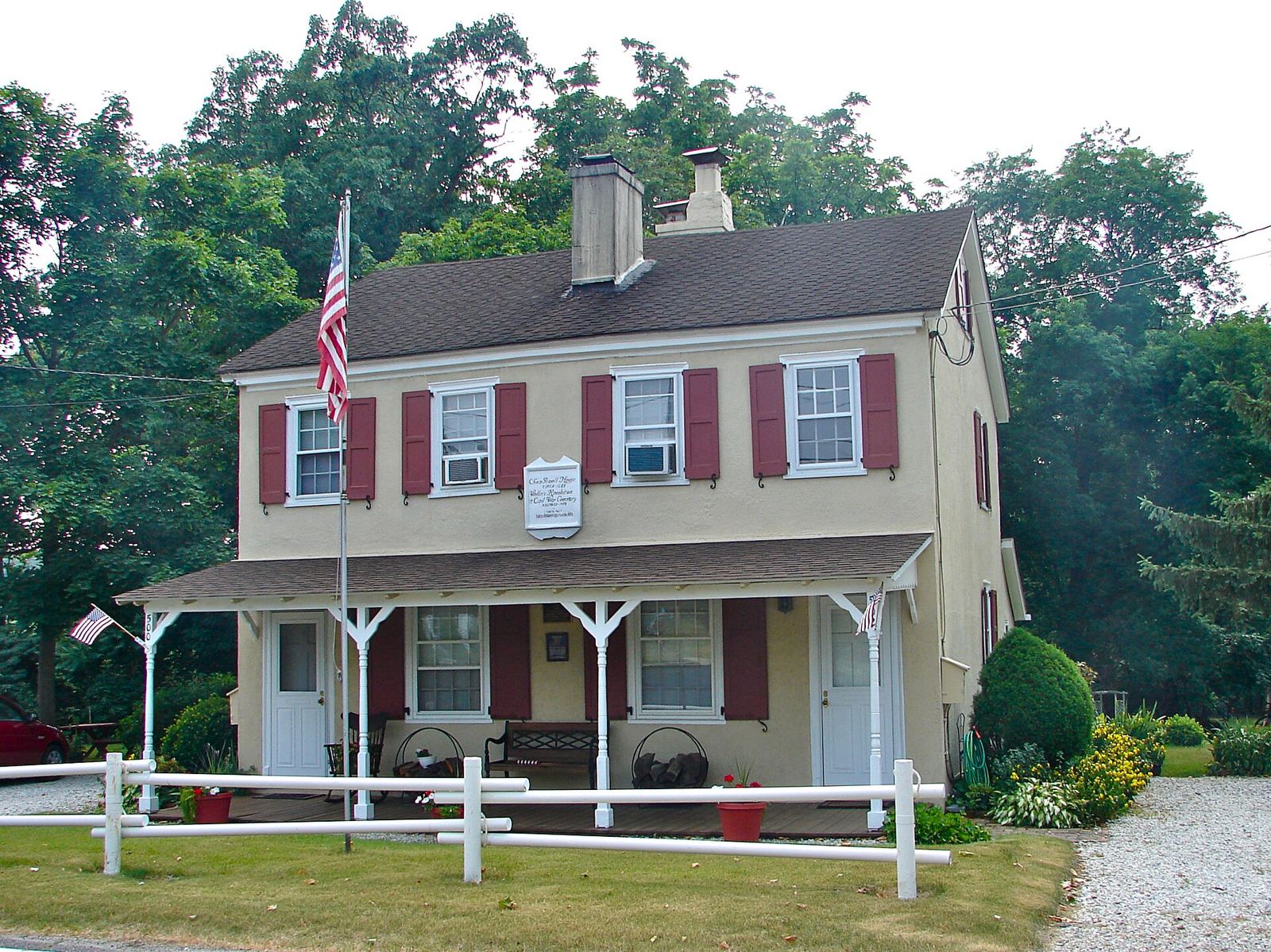
If you want to put your hand on the oldest part of the story, you can. The Chew-Powell House, built in 1688 — seven years before the township was even incorporated — still stands on Good Intent Road in the township’s Blenheim section, listed on the National Register of Historic Places since 1975. Think on that for a moment. That house was already standing, already sheltering a family through South Jersey winters, before there was a township to contain it, before William Penn’s colony had fully found its footing, before almost anything we think of as American had begun. It watched the whole experiment happen from its windows.
The witnesses we have left
These are the places that do the quiet work of memory for a community — the Chew-Powell House, and the old Gabreil Daveis Tavern in Glendora, built in 1756, buildings that have outlived every person who ever argued politics inside them. We tend to treat historic preservation as a hobby for a certain kind of enthusiast, a matter of plaques and bake sales. It is something larger than that. These structures are the only witnesses we have left. Tear one down and you don’t just lose a building; you lose the last thing in town that actually remembers.
Tear one down and you don’t just lose a building; you lose the last thing in town that actually remembers.Henry Whitaker
I think about that when I drive through the newer stretches of the township, the developments and the shopping plazas, the subdivisions rising on ground that was farmland inside living memory and forest inside the township’s own long memory. There is nothing wrong with a place that grows. Gloucester Township has been growing and changing since the first colonist decided this soil was worth staying on. But growth and memory are not enemies, and the healthiest communities hold both at once — building the new street while keeping the 1688 house standing at the end of it.
Three hundred and thirty years is a long time for a name to survive. It has crossed an ocean from the English city that first held it, outlasted its place in the New Jersey county that first claimed it, and outlived generations of residents who never gave a thought to where the word came from. The name endures because, consciously or not, we decided it should. That is all heritage ever really is — the things a community chooses to carry forward, one generation handing them to the next, across water and across centuries, until they land in our hands and it becomes our turn to decide what we keep.
Based on municipal history records and local historical reporting on Gloucester Township, the Chew-Powell House, and the Gabreil Daveis Tavern.
More South Jersey History
The old places are still standing; go see one this weekend.
Read More Local News →