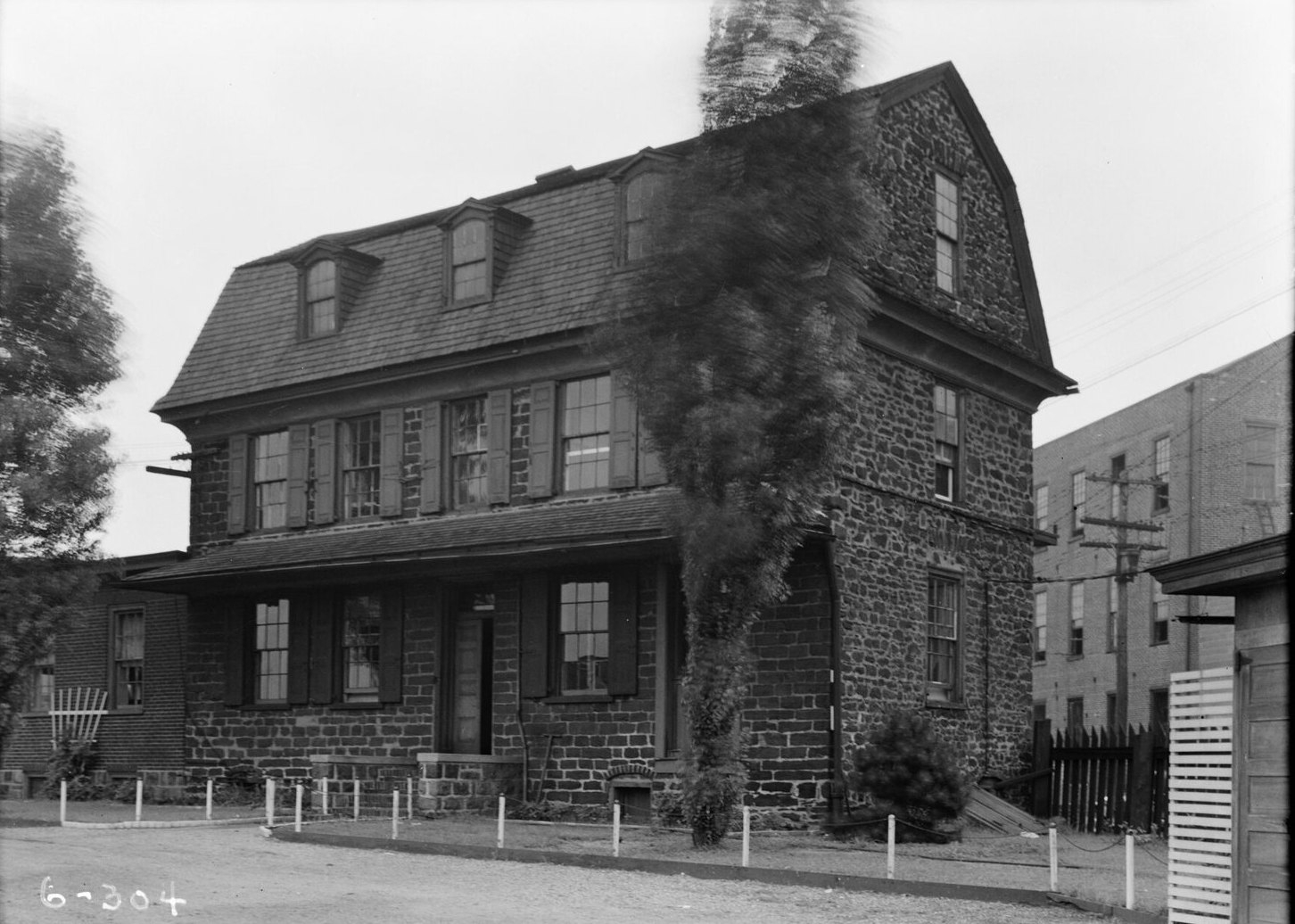
CAMDEN — Walk past the old stone building at the foot of Erie Street and, until recently, you’d have been forgiven for walking right past it. That’s the quiet tragedy of so much South Jersey history. It survives in plain sight, unlabeled, waiting for someone to notice. The Benjamin Cooper Tavern has been waiting a long time.
It was built in 1734, on ground that was once Camden’s first English settlement — Cooper’s Ferry, the crossing that gave this city its start. Nearly three centuries. Let that number settle. The tavern was standing before there was a United States to be a part of, and when the Revolution came, it did not merely watch from a safe distance. British troops occupied the building. It sat close to the churn of the Battle of Red Bank downriver at Fort Mercer, and it stood witness to the great hinge of 1778, when the British evacuated Philadelphia and the war’s center of gravity shifted. This was not a bystander’s building. This was a building in the room where it happened.
And for generations, it had almost nothing to show for it.
Three centuries, then a ribbon
That changed this year. After a restoration costing roughly $4 million — funded through federal, state, and local grants, with the single largest share coming from the New Jersey Historic Trust — the old tavern reopened in June as the American Revolution Museum of Southern New Jersey. Congressman Donald Norcross joined the Camden County Historical Society and a crowd of officials to cut the ribbon. The first floor opened its doors to the public, and a corner of our history that had been overlooked for two and a half centuries finally got a name on the door that matched its weight.
The timing is no accident. This is the year of the nation’s 250th — the Semiquincentennial, that mouthful of a word marking two and a half centuries since the Declaration was signed just across the Delaware. The commemorations have, predictably, gravitated toward Philadelphia and toward North Jersey’s better-known battlefields. South Jersey’s Revolutionary story has long been treated as a footnote to someone else’s chapter. Museum officials in the region say as much, and they’re right. We have let our own history be told by our neighbors.
A correction on Erie Street
A restored tavern on Erie Street is a small, stubborn correction to that. It says: the Revolution happened here too. It says the people who crossed at Cooper’s Ferry, who sheltered and schemed and survived in these walls, were part of the founding, not spectators to it.
A people that forgets where it stood is a people easily told where to go.Henry Whitaker
I’ll make my case plainly, because it’s fall and the foliage is turning and this is the best season there is for history. Go see it; check with the Camden County Historical Society before you make the trip, since tours have been by appointment. Stand on the floorboards. A people that forgets where it stood is a people easily told where to go. For 250 years, the tavern at the foot of Erie Street remembered for us. The least we can do now is walk in and listen.
Based on reporting from The Philadelphia Inquirer, PhillyVoice, Bisnow, and the Preservation Alliance.
More South Jersey History
The people, places and stories that made this region. The Gazette keeps South Jersey’s history close.
Read More Local News →