Drive down to the borough of National Park in Gloucester County, walk out to the grassy bluff where the land drops away toward the Delaware, and you are standing on the ground where a badly outnumbered American garrison did something the fall of 1777 had given them little reason to believe they could do. They won.
The date was Oct. 22, 1777 — and with the 249th anniversary of the Battle of Red Bank arriving next month, and the whole region leaning into America’s 250th, it’s worth remembering exactly what happened here, because it is not the story we usually tell about that miserable autumn.
The autumn of 1777
Some context. By October 1777, the Revolution felt as though it were slipping through the colonists’ fingers. Philadelphia, the capital, had fallen to the British. Washington’s army had been beaten at Brandywine and would soon shuffle off toward a hard winter at Valley Forge. The one thing keeping the British from fully supplying their prize was the Delaware River, and the Americans had fortified it — Fort Mercer on the New Jersey side, Fort Mifflin across the water in Pennsylvania — to choke off the ships.
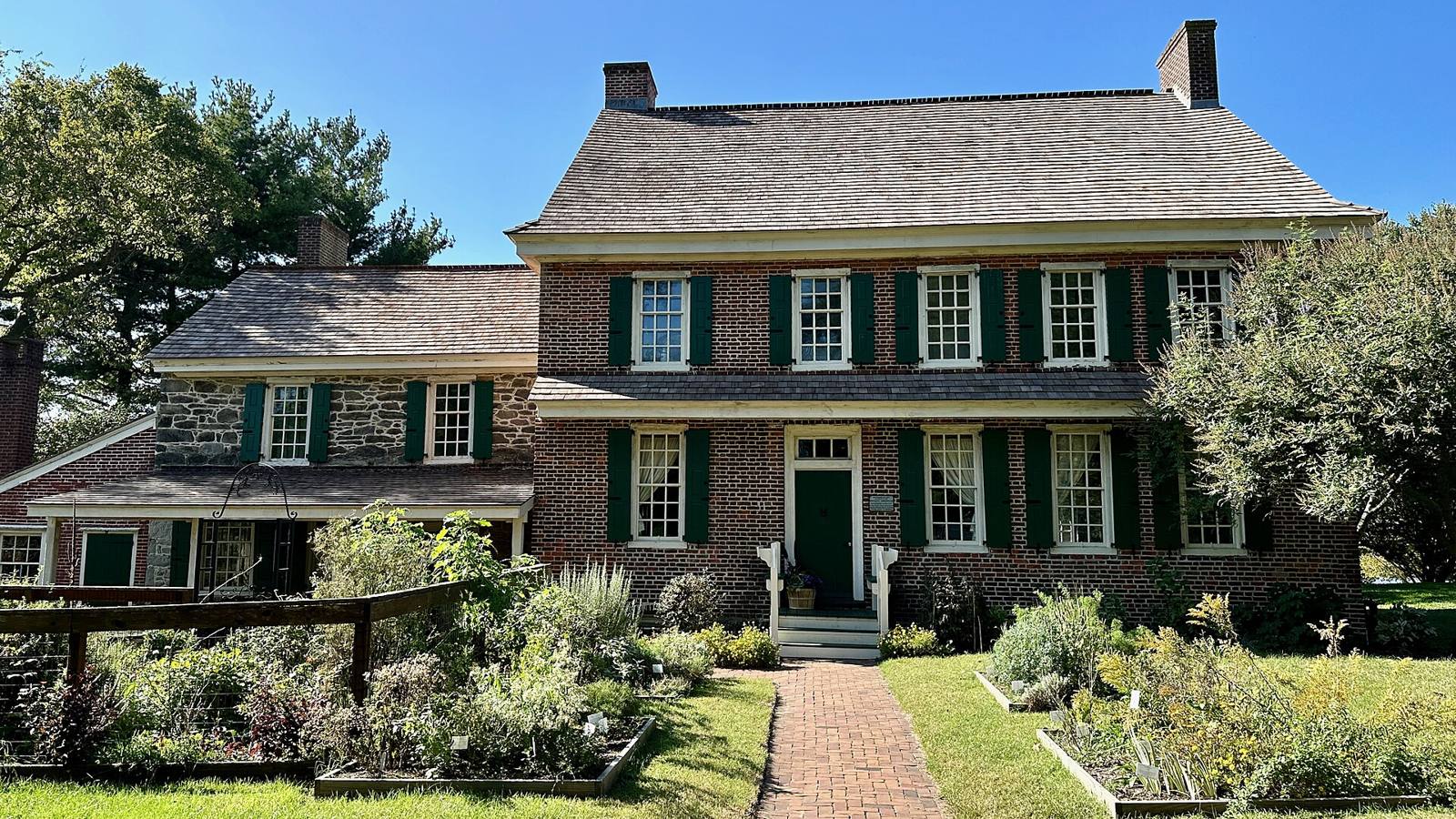
Fort Mercer was thrown up in 1777 on the 400-acre farm of James and Ann Whitall, a Quaker family whose 1748 house still stands on the site today. The fort was named for Brigadier General Hugh Mercer, killed earlier that year at Princeton. Into it went roughly 600 Americans, many of them Colonel Christopher Greene’s Rhode Island Continentals.
A short afternoon’s work
Against them the British sent a Hessian force of some 2,300 — professional German soldiers hired to do the Crown’s fighting, confident that a garrison a quarter their size would fold. Colonel Carl von Donop, who commanded them, is said to have expected a short afternoon’s work.
He got a slaughter instead, and it went the other way. When the assault came, Greene’s defenders held their fire and their nerve, then loosed it at close range into the advancing columns. The numbers still stagger: the Americans counted 14 killed and 23 wounded. The Hessians left behind roughly 82 dead, 228 wounded and 60 captured. Von Donop himself was mortally wounded and died three days later; he was buried on the battlefield, on the land of the very family whose farm the war had swallowed.
The Whitalls
I’ve always found the Whitalls the most human thread in this story. They were Quakers — pacifists by conviction — whose land was seized for a fort, whose crops and orchard were trampled by an army, and who, when the shooting stopped, are remembered for helping care for the wounded of both sides. There is something in that image, the pacifist farmwife nursing the enemy’s wounded in her own house, that says more about the human cost of independence than any casualty count.
The victory didn’t hold the river forever. Fort Mifflin fell weeks later, and the British eventually cleared the Delaware. But Red Bank bought the Continental cause precious time and precious morale at the exact moment both were running dangerously low, and it did it here, on our side of the river, with South Jersey farmers’ fields as the battlefield.
The crossroads of the war
That’s the piece I hope people carry into the 250th. New Jersey saw more Revolutionary fighting than any of the thirteen colonies — the National Park Service counts 296 significant engagements here, plus hundreds of smaller skirmishes. We were not a quiet corner of the war. We were the crossroads of it, the ground armies marched across and bled on, again and again.
We were not a quiet corner of the war. We were the crossroads of it, the ground armies marched across and bled on, again and again.Henry Whitaker
Red Bank Battlefield is Gloucester County’s historic park now, and the Whitall house still offers tours and programs through the year. You can stand where Greene’s men stood, look out at the river they were guarding, and take the measure of what 600 outnumbered men managed on an October afternoon when nearly everything else was going wrong. Next month marks 249 years. Somehow it still feels close enough to touch.
Based on reporting from Gloucester County government records, the American Battlefield Trust, Crossroads of the American Revolution, and the National Park Service.
More South Jersey History
In the nation’s 250th year, the Gazette is walking the ground where it was won.
Read More Local News →